Catch the Sea of Clouds

ContinentAsia

CountryChina
A sea of clouds looks absolutely fantastic in a photo, and it isn't luck.
It's timing, altitude, and knowing which morning the sky will cooperate. Get those three lined up, and you'll stand above a rolling white ocean while everyone below you stares at fog.
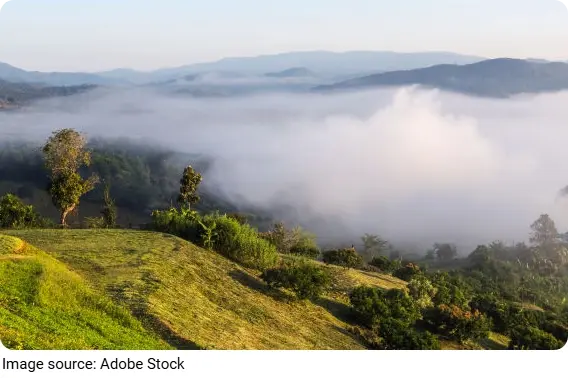
Why Dawn Does the Heavy Lifting
The cloud ocean forms overnight when moist air cools and condenses in the valley; then it burns off fast once the sun climbs. That's why the window is so short. On Huangshan in Anhui, the classic viewing decks like Bright Summit and the Refreshing Terrace fill up before 5 a.m., and the cloud layer often starts thinning by 8 or 9. Arrive at 7, and you may catch leftovers. Arrive at 4:30 to get the full show, plus a spot to stand.
Reading the Sky the Night Before
You don't need a meteorologist, but you do need two numbers. A big gap between daytime and nighttime temperature, plus high humidity after rain, is the setup you want. Clear nights with a heavy dew and a light breeze tend to deliver. Windy nights scatter the cloud and leave you with nothing. If the forecast shows rain clearing in the afternoon, plan to sleep near the trailhead that night, because the following dawn is your best bet. Locals on the mountain will tell you the same thing: rain today, cloud sea tomorrow.
Altitude Decides What You See
You need to be above the cloud, not inside it. On Huangshan, that means getting over roughly 1,600 meters, which is why the cable car up to Yuping or Yungu saves you two hours of dark climbing. Ride it the evening before if it's running, sleep at a summit hotel (expect around $100 to $150 a night for a basic room), and walk out to the deck before first light. If you're hiking, start around 3 a.m. with a headlamp and give yourself a generous buffer.
Gear and Shots That Actually Work
Pack layers, because the summit at dawn sits near freezing even in summer, and bring a windproof shell. For photos, a tripod is the one thing that changes your results, since pre-sunrise light means slow shutter speeds. Shoot at f/8 to f/11 for depth across the cloud layers, and bracket your exposures, because the bright cloud tops and dark ridges overexpose fast. A polarizing filter cuts glare on the white surface. And don't just fire wide; zoom into a single peak poking through the cloud for the frame people remember.
Practical Timing and Backup Plans
Book your summit room weeks in advance during peak season, since the good decks get crowded and the hotels near the top fill up early. Check the cable car's first run time the day before, because it shifts with the season. If the dawn flops, stay put for the late afternoon, when clouds sometimes rebuild as the air cools. And keep a second morning in reserve. Two chances roughly doubles your odds, which is the cheapest insurance you can buy on a trip like this.

The whole game comes down to being up there before the light arrives and knowing the night before whether it's worth the alarm. Set two alarms, sleep close to the trail, and give yourself that backup dawn. When the cloud ocean finally rolls in below you, you'll be glad you didn't hit snooze.