Roof Beasts of Beijing

ContinentAsia

CountryChina
Hello Lykkers! Most visitors to the Forbidden City spend their time looking straight ahead, admiring the grand halls and the dragon thrones inside. But the real magic is happening above your head. Look up at the sweeping yellow roofs, and you will see a small procession of creatures lined up on the ridges.
These are the roof beasts, and they are far more than decoration. They are a 600-year-old insurance policy, a status symbol, and a storybook all rolled into one.
Forbidden City
The Practical Secret Hiding Under the Beasts
Here is the thing nobody tells you. Those little glazed figures are actually hiding something very sharp. Traditional Chinese buildings are made of wood, and the roof tiles were held in place by long iron nails.
To stop those nails from rusting in the rain, the craftsmen made little ceramic caps shaped like animals and placed them over the nail heads. So the beasts are, quite literally, the hats for the building's hardware. They protect the roof from water damage, which for a wooden palace is a matter of life and death.
Why the Hall of Supreme Harmony Is Different
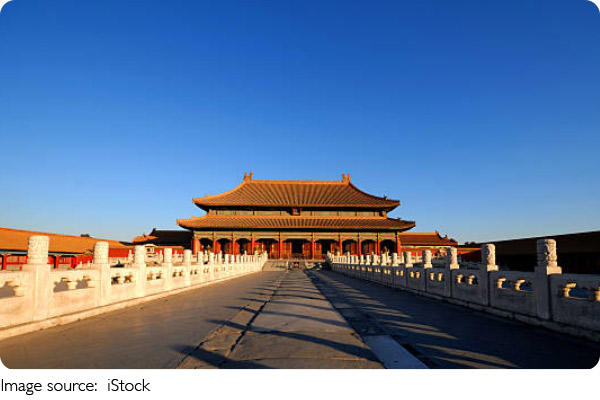
If you only look at one roof in the entire complex, make it the Hall of Supreme Harmony. The Hall of Supreme Harmony is the largest hall in the Forbidden City. Look for the ten animal figures at each roof corner. If you walk down to the smaller palaces in the inner court, you will see the number drop to seven, and on minor side halls, it might be just three or five. The number of beasts was a physical ranking system. You could tell a building's importance just by counting the tiny figures on its ridge.
The Cast of Characters
The lineup is not random. It starts with a man riding a chicken (or a phoenix, depending on the story), followed by a dragon, a phoenix, a lion, a heavenly horse, a sea horse, and so on. In one version of the legend, a magical bird carries the rider to safety. The animals behind him each carry a specific job. The lion brings power. The sea horse can travel through water. The Xiezhi, a one-horned beast, is the symbol of justice and can tell right from wrong. The very last figure, only present on the Hall of Supreme Harmony, is called Hangshi. It looks like a monkey with wings holding a stick, and it is said to be the incarnation of a thunder spirit, there to protect the wooden palace from lightning.
Jingshan Park
Where to Get the Best View
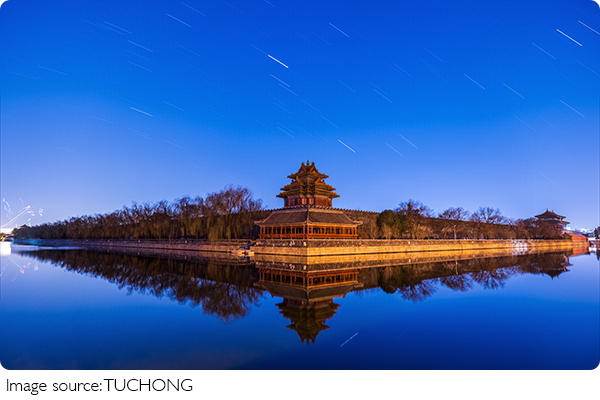
To see the beasts clearly, you need to be close to the buildings, but the best view of the roofs themselves is actually from the outside. If you want to see the full sweep of the golden tiles and the little silhouettes against the sky, skip the crowds inside for a moment. After you exit the Forbidden City through the north gate, cross the street to Jingshan Park. A short climb to the top of the hill gives you a panoramic view looking south over the entire palace. From up there, the roof ridges look like golden waves, and you can see the tiny beasts lining the edges of every hall, still standing guard after all these centuries. Standard admission to Jingshan Park is 2 yuan.
The Symbolism You Can't Miss
The Forbidden City is a place where every detail matters. The beasts are not just cute; they represent the ancient belief that wood is vulnerable to fire and water. Many of the animals, like the sea horse and the Xiaoyu (a fish-dragon), are associated with water and rain. They were placed there to magically protect the palace from fire, which was the greatest fear of every emperor. When you stand in the courtyard and look up, you are not just looking at art. You are looking at a 600-year-old prayer for safety, written in glazed ceramic.
Getting to the Forbidden City
From Beijing Capital Airport, take the Capital Airport Express into the city for 25 yuan. Subway Line 1 stops at Tiananmen East, within walking distance of the Forbidden City’s entrance at the Meridian Gate. City subway fares start at 3 yuan. Book your Palace Museum ticket in advance. Standard admission is 60 yuan from April through October and 40 yuan from November through March.
Where to Stay Near the Forbidden City
Wangfujing and Dongdan are convenient areas to stay if you want to reach the Forbidden City early. Budget around 350 to 720 yuan per night for a standard hotel. Look for a room near a Line 1 station so you can take the subway to Tiananmen East in the morning.
Where to Eat After Your Visit
If you’re heading east toward Chaoyangmen after visiting Jingshan Park, budget around 20 yuan per person for a simple vegetarian buffet near Nanzhugan Hutong. Look for dishes such as vegetable dumplings, tofu, and stir-fried greens.
Final Thoughts
The next time you are walking through the Forbidden City, take a minute to stop and look up. The emperors are gone, the throne rooms are empty, and the crowds are moving through the gates. But the little beasts on the roof are still there, doing their job. The figures cover the fastenings that help secure the roof tiles. They also reflect a traditional belief that the figures could protect the palace from lightning.