Along the Emerald Soča

ContinentsEurope

CountriesSlovenia
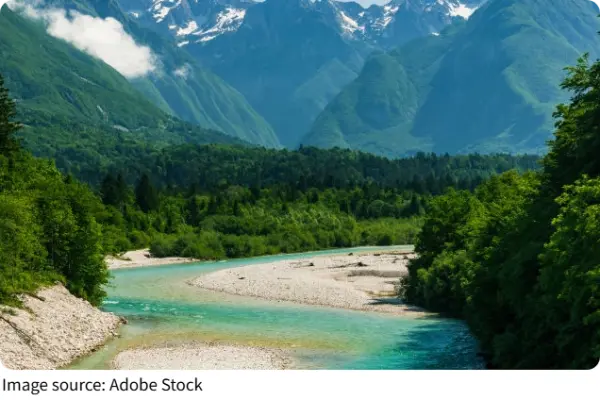
In Slovenia's Soča Valley, the river is famous for its extraordinary emerald-green water. Near Bovec, the Great Soča Gorge reveals this color at its most dramatic, as the current squeezes between pale limestone walls before opening into clear pools surrounded by forest.
A half-day outing offers enough time to explore the gorge's woodland paths and continue into the Trenta Valley. Along the way, suspension bridges, rocky riverbanks, and a small alpine botanical garden reveal different sides of this beautiful corner of the Julian Alps.

Start Where the River Widens
From Bovec, follow the road toward Trenta for approximately 11 kilometers until you reach the turnoff for the Lepena Valley.
Near this junction lies the lower end of the Great Soča Gorge, known locally as Velika korita Soče.
The gorge stretches for approximately 750 meters, with limestone walls rising above a narrow channel of remarkably clear water.
Begin at a designated parking area and follow the established paths toward the river.
At the lower end, the channel widens into beautiful emerald pools, offering an impressive view without requiring a long hike.
Farther upstream, the forest trail provides occasional glimpses into the narrower sections.
Stay on marked paths and avoid approaching unprotected edges, particularly where damp roots and loose stones make the ground slippery.
Choose a River Detail
As you explore the gorge, notice how the water changes color with depth and surrounding light.
Shallow sections can appear almost transparent, revealing smooth stones beneath the surface, while deeper pools take on intense shades of turquoise and green.
At the upper end of the gorge, a wooden suspension bridge provides another perspective on the river flowing between the limestone walls.
Take photographs from secure positions and leave enough room for other visitors to cross.
The contrast between pale rock, dark forest, and bright water makes even a small section of the gorge worth photographing.
After rainfall, the current can become stronger, and walking surfaces more slippery.
Swimming and boating through the narrow gorge are dangerous and subject to restrictions, so enjoy the scenery from established viewing areas.
Lepena
A Garden Above the Water
Continue farther into the Trenta Valley to visit the Juliana Alpine Botanical Garden, a peaceful attraction dedicated to the plants of the Julian Alps.
Established in 1926, the garden occupies a hillside setting where alpine flowers and other mountain plants grow among rocks and small paths.
It is generally open from May through September, although exact dates and hours depend on seasonal conditions.
Standard admission is approximately €5 (US$6) per person, with family tickets around €10 (US$12).
The garden is particularly rewarding for visitors interested in mountain vegetation, as it brings together species that would otherwise require hikes at different elevations to encounter.
Paths are uneven and sloping in places, so comfortable walking shoes are recommended.
Allow around 45–60 minutes to explore without rushing.
Explore the Trenta Valley
Beyond the gorge, the Trenta Valley offers a quieter side of the Soča River, with traditional houses, mountain meadows, and forested slopes beneath the Julian Alps.
The river continues through the valley, sometimes flowing gently across broad stony sections before narrowing again between rocky banks.
Several roadside viewpoints and established walking paths provide opportunities to appreciate the landscape without committing to a demanding hike.
If you have extra time, stop at a suitable riverside viewpoint and watch the water change color as sunlight moves across the valley.
The surrounding mountains are especially beautiful on clear mornings, when their rugged outlines stand above the forests.
Public transport is more frequent during the main visitor season, but services can be limited outside summer.
If traveling without a car, confirm your return connection before exploring farther up the valley.
Stay in the Valley Town
Bovec makes a convenient base for exploring the Great Soča Gorge and surrounding mountain scenery.
Hotel Alp, located in central Bovec, offers easy access to restaurants and local services. Rooms may start around €90–€130 (US$105–$150) per night, depending on the season and room category.
Its central location is particularly useful for travelers who prefer to explore the town on foot after a day outdoors.
Hotel Mangart, situated near the edge of Bovec, offers another comfortable option, with rates of approximately €110–€160 (US$130–$185) per night.
These prices are planning estimates rather than guaranteed rates, and summer demand can push costs higher.
Check whether breakfast, parking, and taxes are included before booking.
Staying overnight also allows time to explore additional sections of the Soča Valley the following morning.
Plan for the Best River Views
The Soča Valley can be visited throughout much of the year, but late spring through early autumn generally offers the most convenient conditions for riverside walking.
May and June bring fresh greenery and strong river flows, while July and August are popular for outdoor activities.
September can be particularly pleasant, with cooler temperatures and fewer visitors than during the busiest summer weeks.
The river's color changes with sunlight, water levels, and recent rainfall, so no two visits look exactly alike.
Bring sturdy footwear, a light waterproof jacket, and drinking water for the forest paths.
Check weather conditions before visiting, especially after heavy rain when trails may become slippery.
For photography, allow time at both the narrow gorge and the wider lower pools, where the water often reveals its most vivid colors.
The Great Soča Gorge offers one of Slovenia's most memorable river landscapes, combining emerald water, towering limestone walls, and peaceful forest trails. A visit becomes even more rewarding when paired with the alpine scenery and botanical garden of the Trenta Valley. Staying in Bovec provides a convenient base for exploring both areas without rushing. Follow established paths, prepare for changing mountain weather, and leave time to appreciate the smaller details along the river. Sometimes the most beautiful view is simply a quiet pool where the sunlight turns the water green.