Namib Desert: Sand & Silence

ContinentsAfrica

CountriesNamibia

CitiesWindhoek
Hello there, readers. You probably expect a desert to be empty and dull, a stretch of sand you drive through and forget.
The Namib does not work that way. It's widely considered the oldest desert on earth, running roughly 1,600 km along Namibia's coast, and the sand dunes at Sossusvlei climb above 300 meters, among the tallest anywhere. People fly across the world to stand at the bottom of them.
Namib Desert
Why the dunes earn the trip
The centerpiece is Sossusvlei, a clay pan ringed by dunes inside Namib-Naukluft Park, the largest national park in Africa. Nearby sits Deadvlei, a white pan scattered with blackened camel thorn trees that died centuries ago and never rotted because the air is so dry. You walk in at sunrise and the sand shifts from deep orange to pale gold within twenty minutes. That color change alone justifies the early alarm.
Getting there and getting around
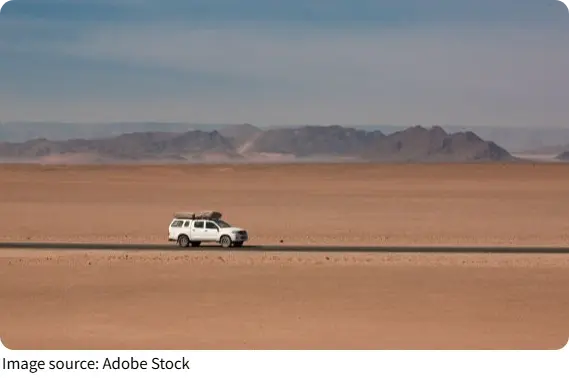
Most travelers land at Hosea Kutako International Airport outside Windhoek, then drive or fly to the park. The drive to Sesriem, the gateway to Sossusvlei, runs about 350 km and takes four to five hours on paved and gravel roads. A small plane to a nearby airstrip cuts that to under an hour but typically costs around US$200–$400 per person. Once inside, you need your own vehicle or a guided tour, because the final stretch to Sossusvlei is deep sand that only 4x4s handle. A shuttle runs from the 2x4 parking area for a small fee.
Costs and timing
Park entry runs about $10 per person per day plus a vehicle fee, and a guided day tour from Sesriem typically costs $80 to $150 per person. Lodges outside the gate range from roughly $150 a night for a simple guesthouse to $600 and up for a luxury desert camp. Go between May and October for cooler days, though nights drop near freezing in June and July. The reward for the cold: the dunes are at their clearest and the light is sharpest.
Plan your visit properly
Stay at least two nights near Sesriem. The park gate opens before sunrise specifically so visitors can reach the dunes for first light, and you'll want one morning for Sossusvlei and Deadvlei and another for the quieter Sesriem Canyon. Carry more water than feels reasonable, at least three liters per person per day, and keep a full tank, because fuel stops are sparse. Book your lodge months ahead for the peak season, since beds near the gate fill up fast.
Food and dining prices
Dining options are limited to the lodges and the small shop at Sesriem. A casual meal or snack typically costs around US$10–$20 per person, while a sit-down dinner at a lodge ranges from US$25–$40. Bringing your own water and snacks from outside the park is highly recommended to save money.

The Namib rewards patience more than speed. Give it a couple of mornings, wake before the sun, and let the dunes show you what they do at first light. You won't forget the color of that sand.