Secrets of Junagarh Fort

Raghu Yadav
| 11-11-2024
 · Travel team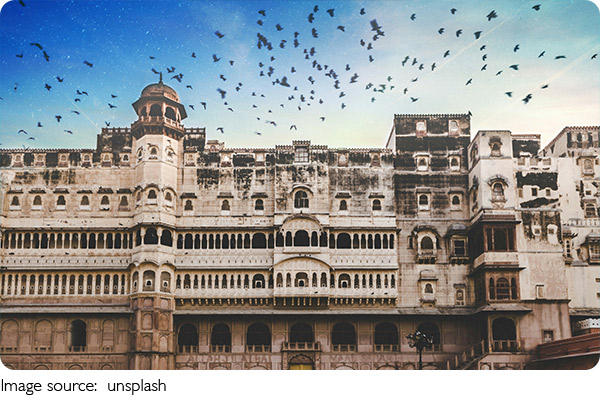
Hey Lykkers! One of the most exquisite and historically significant forts in India is Junagarh Fort, which is situated in the center of Bikaner, Rajasthan.
In contrast to many Rajasthani forts that are perched above hills, Junagarh is a stunning example of architecture located in the Thar Desert plains.
How to Reach Junagarh Fort
By Air: The nearest airport is Bikaner Airport (Nal Airport), about 16 km from Junagarh Fort. However, most international travelers will likely need to fly into Jaipur International Airport and then take a connecting flight or drive to Bikaner.
By Train: The fort is approximately 3 km from the railway station.
By Road: You can take a bus or hire a private taxi from nearby cities like Jaipur (335 km), Jodhpur (250 km), and Delhi (450 km).
Everyone Should Know These Facts Hidden Behind the Marvelous Edward VII Rex Imperator Statue at Victoria Memorial!
Exploring 432 Park Avenue: The Iconic Skyline Gem of New York City You Must Visit!
Rumeli Fortress: Türkiye's Historic Jewel on the Bosphorus. Let's Visit Today!
Küçüksu Palace: A Jewel of Ottoman Architecture Need To Explore Today!
Explore NYC’s top attractions, including Central Park, Times Square, and more, with essential travel tips.
Explore the Sunshine Skyway Bridge for stunning views, fishing piers, and scenic trails, with practical tips for memorable visit.
History of Junagarh Fort: A Fortress with a Legacy
From Chintamani to Junagarh:
Junagarh Fort was originally known as Chintamani. It was built under the supervision of Karan Chand, the Prime Minister of Raja Rai Singh, the sixth ruler of Bikaner. The construction of the fort began in 1589 and was completed in 1594. Unlike most forts in Rajasthan, which are perched on hilltops, Junagarh was strategically built on the plains. It was renamed Junagarh (meaning "Old Fort") in the early 20th century when the ruling family moved to the newly constructed Lalgarh Palace outside the fort limits.
The Rise of Bikaner:
Before the fort's construction, the city of Bikaner was founded in 1472 by Rao Bika, the second son of Rao Jodha, the founder of Jodhpur. Bika established his own kingdom in the Thar Desert, and Bikaner became an important trade route between Central Asia and the Gujarat coast. The fort was built to protect the city and its people from invasions, and despite several attacks, it remained unconquered, except for Kamran Mirza, the son of Mughal Emperor Babur, in 1534.
Explore the Architectural Marvel
A Fortress of Palaces and Temples:
Covering 5.28 hectares, Junagarh Fort is a sprawling complex of palaces, temples, and pavilions. The fort's architecture blends several styles, showcasing a unique mix of Rajput, Mughal, and Jain influences. As you wander through the fort, you'll encounter stunning monuments like the Anup Mahal, Karan Mahal, Chandra Mahal, and Badal Mahal, each with its distinct charm and historical significance. The Anup Mahal, built by Anup Singh, was a public audience hall, while the Karan Mahal was later converted into the Anup Mahal.
Iconic Walls and Gates:
The fort is surrounded by robust walls and a moat that once acted as a protective barrier. Two entrances—one in the east and the other in the west—lead to the inner sanctum of the fort.
Rulers of Junagarh Fort
Over the centuries, the fort witnessed significant expansion and renovations by its rulers. Raja Rai Singh, a Mughal general and the sixth ruler of Bikaner, played a pivotal role in its development. Later, rulers like Karan Singh, Anup Singh, and Ganga Singh added new palaces, decorated courtyards, and audience halls. Notably, Ganga Singh, who reigned from 1887 to 1943, was instrumental in modernizing the fort and even commissioned the construction of Lalgarh Palace, where the royal family later resided.
The Geography of Junagarh Fort
Situated in the arid Thar Desert, Junagarh Fort is surrounded by the natural beauty of Rajasthan's landscape, bordered by the Aravalli mountain range to the northwest. Bikaner, along with Jaisalmer and Jodhpur, is one of the three cities in Rajasthan that form the Desert Triangle.
Bikaner "Junagarh Fort" Rajasthan, India in 4K Ultra HD
Video by ONLY in INDIA
Things to See and Do at Junagarh Fort
Marvel at the Palaces:
Each palace within the fort, such as Anup Mahal and Badal Mahal, offers a glimpse into the opulent lifestyle of the Rajput rulers. These palaces are adorned with stunning wall paintings, glasswork, and intricate carvings, representing a blend of Rajput and Mughal architectural styles.
Explore the Museums:
The fort houses a museum that showcases the royal family's personal artifacts, weapons, and historical documents. The Durbar Hall is a must-see, where important ceremonies are held, and you can get a sense of the grandeur that once enveloped the royal court.
Best Time to Visit Junagarh Fort
The best time to visit is between October and March when the weather is cooler and more pleasant for sightseeing. The summer months (April to June) can be extremely hot due to the desert climate, so it's advisable to avoid visiting during this period.
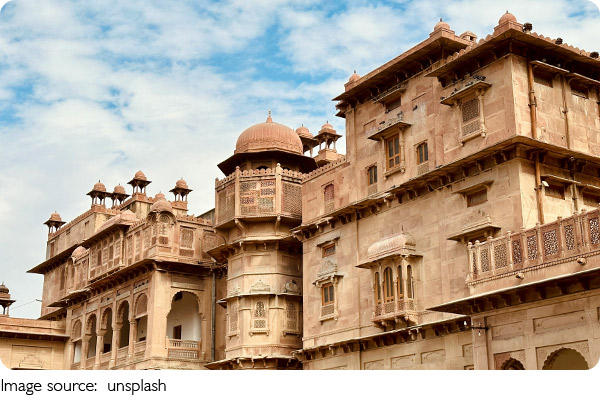
Junagarh Fort in Bikaner is a testament to the resilience, architectural brilliance, and royal grandeur of Rajasthan. The fort's majestic walls, palatial interiors, and panoramic desert views make it an essential part of any trip to Rajasthan. So, let's head to Bikaner for a once-in-a-lifetime adventure at this timeless monument!