Beacons of Maritime Culture

Caroll Alvarado
| 30-09-2024
 · Travel team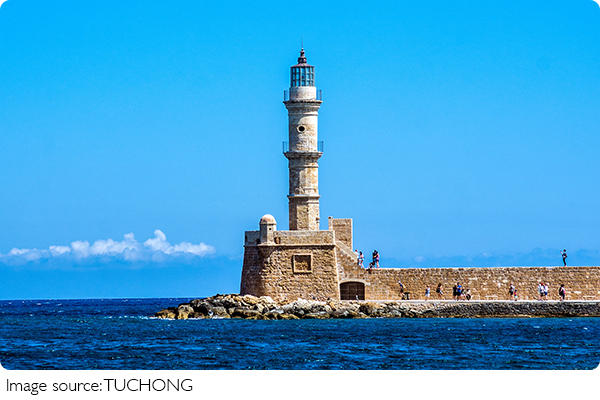
Lighthouses have been guiding ships for centuries and have played a crucial role in maritime navigation. The purpose of a lighthouse is to guide ships and warn them of potential danger zones.
However, with the advancements in technology, their navigational value has decreased. Nonetheless, lighthouses still hold immense historical and cultural significance and remain as human geographic coordinates sought after by various countries.
In earlier times, lighthouses used paraffin lamps as their light source, and the lens system was rotated manually by the person in charge of the lighthouse.
The lens system was often floated in mercury to reduce friction. However, with the advent of modern technology, electric lights and clockwork mechanisms are now used.
Mount Tatra, a mountain peak located on the border between Poland and Slovakia, is the highest part of the Carpathian Mountains.
Explore Abu Dhabi's stunning skyline, serene beaches, and thrilling experiences—perfect for every traveler's adventure.
Discover the serene beauty of the Dolomites in spring, with hiking, photography, and relaxation amidst stunning natural landscapes.
Discover peaceful grasslands like the Great Plains, Pampas, and Mongolian Steppe—perfect for travel and Instagram moments.
Discover the North Head Lighthouse in Westkapelle, a peaceful coastal gem offering scenic walks, beach relaxation, and Dutch history.
Explore Nashville's skyline, iconic sites, and vibrant music culture, with tips on planning a memorable visit for Lykkers.
These mechanisms are powered externally, and diesel generators or solar panels provide electricity for the lighthouse keepers.
To increase the brightness of lighthouses, large lenses are required.
However, the weight of the lenses may not be able to support the weight of the tower.
To solve this problem, the Fresnel lens was invented, which reduced the weight and capacity of the lens while maintaining the focal distance.
Some lighthouses, such as Cape Race in Newfoundland and Makapu'u Point in Hawaii, use the hypradiant Fresnel lens, specially developed by Chance Brothers.
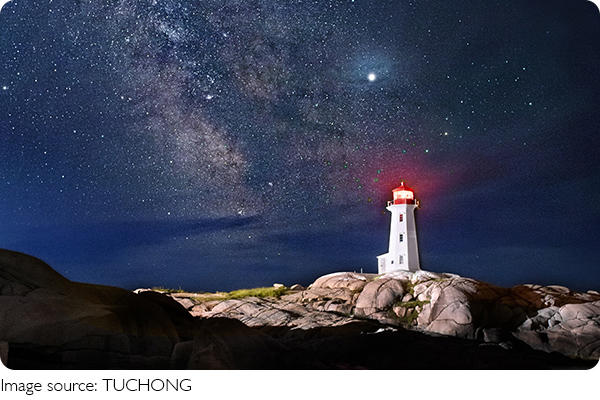
Modern lighthouses have omnidirectional systems that emit very bright light, making it unnecessary to have more space to collect light.
However, in many designs and observation beacons, a continuous but weak light is preferred, followed by a strong light at short intervals.
These lighthouses are arranged as special lighthouses that give out spaced light. For example, the Scheveningen lighthouse in the Netherlands changes light intensity every 2.5 to 7.5 seconds.
In conclusion, while the navigational role of lighthouses has diminished, they continue to hold significant historical and cultural value. They represent an important part of our heritage and have become iconic symbols of the sea.